Harvard Ideas Symposium
Dates: May 1–3, 2026
Location: One Brattle Square, Cambridge, MA
Format: In-person, Immersive
Tuition: $3,750 (space is limited — free cancellation up to 14 days prior)
You'll choose between one of two concurrent learning tracks: Perspectives that Provoke or AI and Society.


Arrival & Check-In
Session 1
Welcome Reception at the Harvard Faculty Club
Arrival & Check-in
Session 1: From Taylor Swift to Tolkien — Why Songs and Stories Feel Like They’re About Us
What brings us to our favorite poems, songs, or stories? How and why do we so often see ourselves in them? How can a set of sounds, a pop hook, or even a costume attach us to experience that both is, and can't be, our own?
We'll talk about that phenomenon with examples, from Taylor Swift to Langston Hughes to Sappho to J. R. R. Tolkien, along with others that participants might bring in. We'll look at the forms, rules, and possibilities that govern particular arts, and at how those possibilities change. And we'll look at why — and how — we might see ourselves in voices, and shapes, and times, and lives, so apparently unlike our own.
Welcome Reception at the Harvard Faculty Club
Arrival & Check-in
Session 1: Learning in the Age of Algorithms: Will AI Expand Opportunity—or Replace It?
Explore how intelligent systems are redefining work, skills, and human potential. Around the world, people are feeling the effects of rapid economic, technological, and environmental change. To thrive in this shifting landscape, students and workers alike will need to build new skills — often for jobs that don’t yet exist.
This session explores how emerging tools like artificial intelligence and immersive technologies (such as virtual and augmented reality) are creating more flexible, engaging ways to learn throughout life. These tools make it possible to practice real-world skills in safe, simulated environments and receive personalized feedback that helps learning stick. We will discuss how schools, employers, and communities can partner to build learning systems that support people at every stage of life — complementing traditional education and opening new pathways for continuous growth.
Welcome Reception at the Harvard Faculty Club
Session 2
Luncheon
Harvard Art Museum Tour
Join us for a tour of one of Harvard's oldest museums, featuring European & American art from the Middle Ages to the present day.
Session 3
Cocktail Reception
Session 2: The Origins of Life — Science’s Boldest Challenge to Our Assumptions About Meaning
Learn what emerging discoveries say about where life begins — and whether our deepest beliefs can survive them.
The mystery of life's origins on Earth and the profound question of our place in the cosmos are finally accessible to modern science. This session will cover a wide-ranging array of successes and puzzles, and a thought-provoking discussion.
Luncheon
Harvard Art Museum Tour
Join us for a tour of one of Harvard's oldest museums, featuring European & American art from the Middle Ages to the present day.
Session 3: The Ethics of Human-Animal Relations — Do Our Moral Frameworks Justify or Condemn the Way We Treat Other Animals?
This session will examine the various views that philosophers have advanced about whether human beings have moral duties to other animals, and what those duties are.
We will focus on Utilitarians and Kantians who have argued that our duties to the other animals are extensive, and that we ought to treat animals very differently than we actually treat them now.
Cocktail Reception
Session 2: AI and Human Flourishing
How can we integrate and regulate AI in ways that protect human attention, democracy, and jobs? This session will consider the challenges posed by and opportunities presented by AI for human well-being and democracy.
The institutions of democracy are straining to deliver stable answers to the complex governance challenges of our day. We can harness AI to strengthen our governance institutions, even as we also need to use those governance institutions to set boundaries for AI. This session will provide an analytical framework for understanding the challenges of AI as well as tools and concepts for understanding how to steward AI in ways that support democracy and human flourishing.
Luncheon
Harvard Art Museum Tour
Join us for a tour of one of Harvard's oldest museums, featuring European & American art from the Middle Ages to the present day.
Session 3: Governing Artificial Intelligence — Law, Regulation, and Accountability in the AI Era
This session will address questions relating to artificial intelligence and, in particular, the rise and widescale adoption of so-called “generative AI” applications. Our discussion will focus both on the challenges and opportunities associated with the regulation of AI and on the implications of these rapidly developing technologies on the practice of law.
The instructor will offer an overview of these technologies and foster a discussion of key substantive legal questions about how cases, statutes, and common law doctrines apply in fields implicated by the development and deployment of AI tools. We will also consider ways in which AI tools are changing the roles of parties that engage with the legal system, including lawyers, judges, and parties.
Cocktail Reception
Session 4
Certificates & Closing Lunch
Session 4: Earth Is An Ocean World — Exploring the Deep Sea, Extreme Life, and the Forces That Shape Our Planet
Earth is an ocean world. From providing much of humankind’s nutrition to being a major driver of economic activity, the ocean is a part of our everyday lives. Nevertheless, our understanding of the ocean — from surface to seafloor — is in its infancy due to the technical challenges of exploring the deep sea.
Today, advances in robotics and other technologies have provided greater insights than ever before. In this program, we will (all but literally) immerse ourselves in the ocean depths and examine how creatures of the deep thrive in this mysterious realm and how their activity shapes our own health and prosperity.
Certificates & Closing Lunch
Arrival and Check-In
Session 4: Who Owns Creativity Now? Copyright, Culture, and Human Authorship in the Generative Era
Consider the current and potential actions of the courts regarding originality, ownership, and the future of creative work. Generative AI is the hottest topic in intellectual property law since ... NFTs (non-fungible tokens).
Unlike NFTs, however, generative AI promises not just a new kind of ownership but a disruption of how creativity and authorship work across the board. This session will explore the legal frameworks courts are using to decide who controls generative AI and its outputs.
Certificates & Closing Lunch

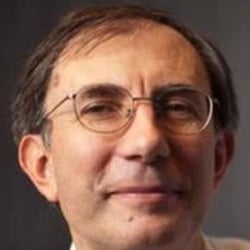
Dimitar Sasselov is the Phillips Professor of Astronomy at Harvard University. He explores stars and planets, and how life emerged on Earth, by specializing in the modes of interaction between light and matter, and the uses of remote sensing. Sasselov and his group do research in experimental photochemistry (in the wet lab), astrophysical observations (as co-investigator in the NASA Kepler & TESS missions), and theory. Sasselov is the founding director of the Harvard Origins of Life Initiative, a cross-disciplinary institute that joins biologists, chemists, and astronomers in searching for the starting points of life on Earth (and possibly elsewhere).
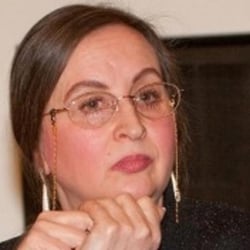
Christine M. Korsgaard (PhD, Harvard University, 1981) is a leading moral philosopher whose work focuses on practical reason, agency, personal identity, and human–animal relations. She is the author of five influential books that explore the foundations of moral obligation and ethical life. The Sources of Normativity (1996), based on her Tanner Lectures, examines how modern philosophers have understood the basis of moral duties and presents her own account. Creating the Kingdom of Ends (1996) collects her essays on Kantian ethics. The Constitution of Agency (2008) and Self-Constitution: Agency, Identity, and Integrity (2009) develop her theory of how moral responsibility arises from the nature of agency. In Fellow Creatures, she offers a Kantian account of our obligations to other animals. Korsgaard also co-edited Reclaiming the History of Ethics: Essays for John Rawls (1997).
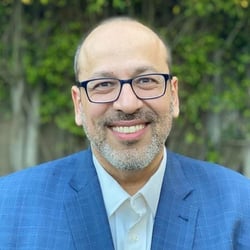
Peter Girguis is a Professor of Organismic and Evolutionary Biology at Harvard University and Co-Director of the Harvard Microbial Sciences Initiative. He earned his B.Sc. from UCLA and his Ph.D. from UC Santa Barbara, and was a David Packard Postdoctoral Fellow at the Monterey Bay Aquarium Research Institute. He joined Harvard in 2005 and is also an adjunct scientist with the Woods Hole Oceanographic Institution’s Applied Ocean Physics and Engineering group. Professor Girguis has received numerous honors for his scientific and teaching contributions, including being named a Distinguished Lecturer by the National Science Foundation, a Merck Co. Innovative Research Awardee, and a recipient of the Lindbergh Foundation Award for Science and Sustainability. He has also received the Lowell Thomas Award for advances in marine science and technology and the Petra Shattuck Award for Distinguished Teaching. He is currently a Gordon and Betty Moore Foundation Investigator for his work on marine symbioses and has authored or co-authored approximately 140 publications.
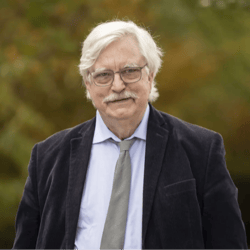
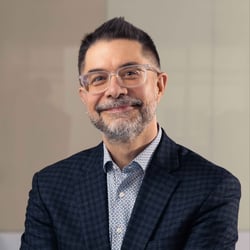
Chris Dede is a Senior Research Fellow at the Harvard Graduate School of Education and was for 22 years the Timothy E. Wirth Professor in Learning Technologies. He previously served as Chair of HGSE’s Teaching and Learning Department and has been recognized for both scholarship and teaching, including being honored by Harvard as an outstanding teacher and named a Fellow of the American Educational Research Association, the Online Learning Consortium, and the Immersive Learning Research Network. Dede is a Co-Principal Investigator and Associate Director for Research of the NSF-funded National Artificial Intelligence Institute in Adult Learning and Online Education. He also co-founded the Silver Lining for Learning initiative to support innovation in education worldwide. His recent books explore how digital, immersive, and AI-enabled technologies are transforming education and lifelong learning, including Teacher Learning in the Digital Age, Virtual, Augmented, and Mixed Realities in Education, and The 60-Year Curriculum: New Models for Lifelong Learning in the Digital Economy.
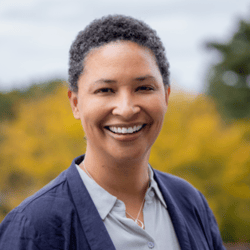
Danielle Allen is the James Bryant Conant University Professor at Harvard University and Director of the Allen Lab for Democracy Renovation at the Harvard Kennedy School, as well as Director of the Democratic Knowledge Project - Learn at the Harvard Graduate School of Education. A scholar of political philosophy, ethics, and public policy, she is also a democracy advocate and contributing columnist for The Atlantic. Allen is the recipient of the 2020 Library of Congress Kluge Prize. From 2015 to 2023, she served as Director of Harvard’s Edmond and Lily Safra Center for Ethics. During the COVID-19 pandemic, she led the development of the nation’s first Roadmap to Pandemic Resilience. From 2020 to 2022, she also ran for governor of Massachusetts, becoming the first Black woman to run for statewide office in the Commonwealth.
Christopher T. Bavitz is the WilmerHale Clinical Professor of Law and Vice Dean for Experiential and Clinical Education at Harvard Law School. He also serves as Managing Director of Harvard Law School’s Cyberlaw Clinic and as Faculty Co-Director of the Berkman Klein Center for Internet and Society. Bavitz teaches courses including Counseling and Legal Strategy in the Digital Age and Music and Digital Media, and his practice focuses on intellectual property and media law, particularly in the areas of music, entertainment, and technology. He oversees many of the Cyberlaw Clinic’s projects involving copyright, free expression, startup advising, and the use of technology to expand access to justice, and he serves as the HLS Dean’s Designate to Harvard’s Innovation Lab.
His research at the Berkman Klein Center examines intermediary liability, online content takedown regimes, and the regulatory, ethical, and governance challenges raised by algorithms, machine learning, and artificial intelligence.
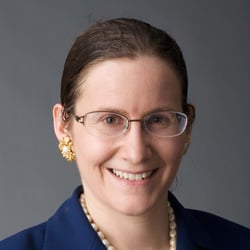
Rebecca Tushnet is a professor of law at Harvard Law School. After clerking for Chief Judge Edward R. Becker of the Third Circuit and Associate Justice David H. Souter on the Supreme Court, she practiced intellectual property law at Debevoise & Plimpton before beginning teaching. Her publications include “Worth a Thousand Words: The Images of Copyright Law” (Harvard L. Rev. 2012); “Gone in 60 Milliseconds: Trademark Law and Cognitive Science” (Texas L. Rev. 2008); and “Copy This Essay: How Fair Use Doctrine Harms Free Speech and How Copying Serves It” (Yale L.J. 2004). Her work currently focuses on copyright, trademark, and false advertising law. Her blog, at Tushnet.BlogSpot.com, has been on the ABA’s Blawg 100 list of top legal blogs for the past three years. Professor Tushnet helped found the Organization for Transformative Works, a nonprofit dedicated to supporting and promoting fanworks, and currently volunteers on its legal committee. She is also an expert on the law of engagement rings.
Who Should Attend
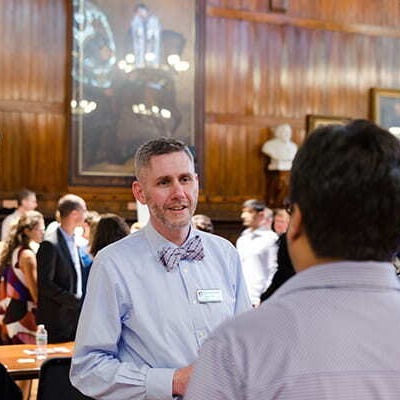
If you're an intellectually curious and engaged learner who seeking to deepen your understanding of the ideas shaping our world today, the Harvard Ideas Symposium is for you! Anyone eager to connect with the spirit of inquiry that defines a Harvard education will enjoy this opportunity to engage directly with leading faculty, exchange ideas with peers, and immerse yourself in a weekend of thought-provoking discussion, discovery, and community building
-

Deepened understanding of major ideas driving contemporary discourse
-

Access to Harvard's most influential faculty thinkers
-

New perspectives on creativity, ethics, and technology
-

Exclusive, not open-to-the-public events on the Harvard campus
-

Receive a Certificate of Completion from the Harvard Division of Continuing Education
Ready to Register?
Join us on campus in Cambridge for an immersive three-day learning experience. Select your desired track to register.